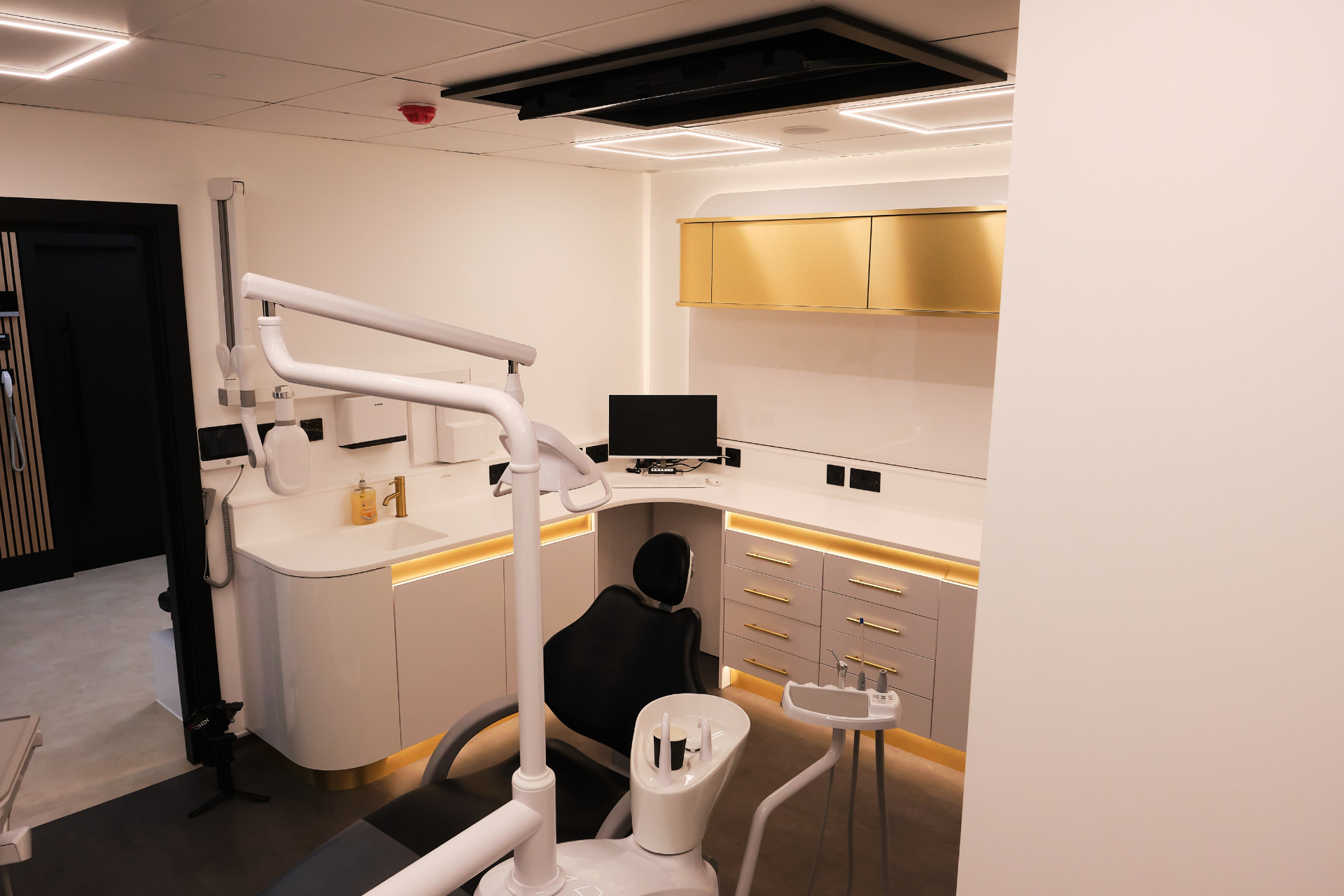
Thorough. Gentle. Full-mouth service
Gum disease treatment
Full-mouth care for gingivitis and periodontitis. We clean above and below the gumline to reduce bleeding, calm inflammation and help gums re-seal to teeth.
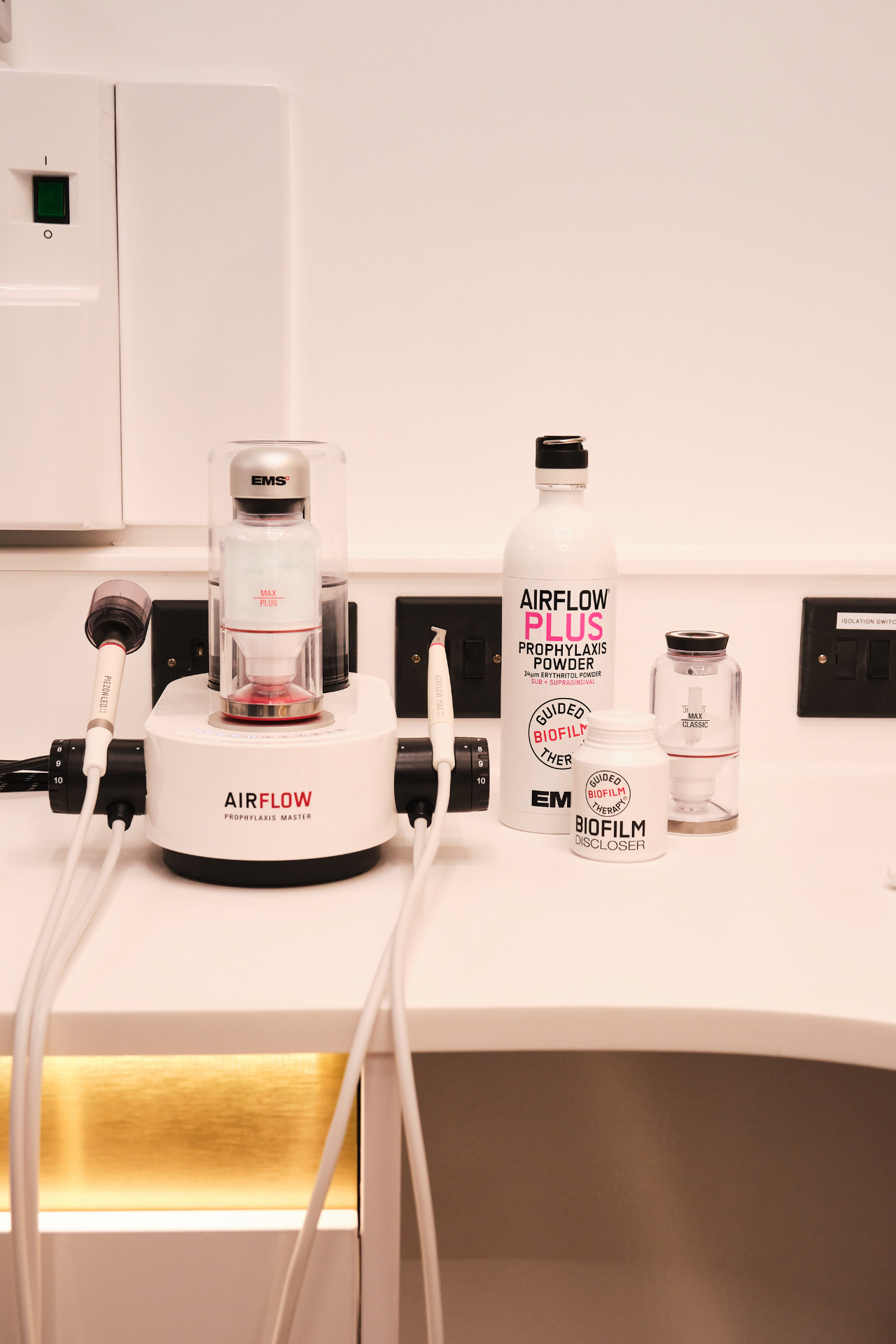
AirFlow comes as standard. We don’t do scale & polish, every hygiene visit uses EMS AirFlow.
- Mini, Regular and Super, sized to your gum health
- Gentle deep clean; local anaesthetic available if areas are tender

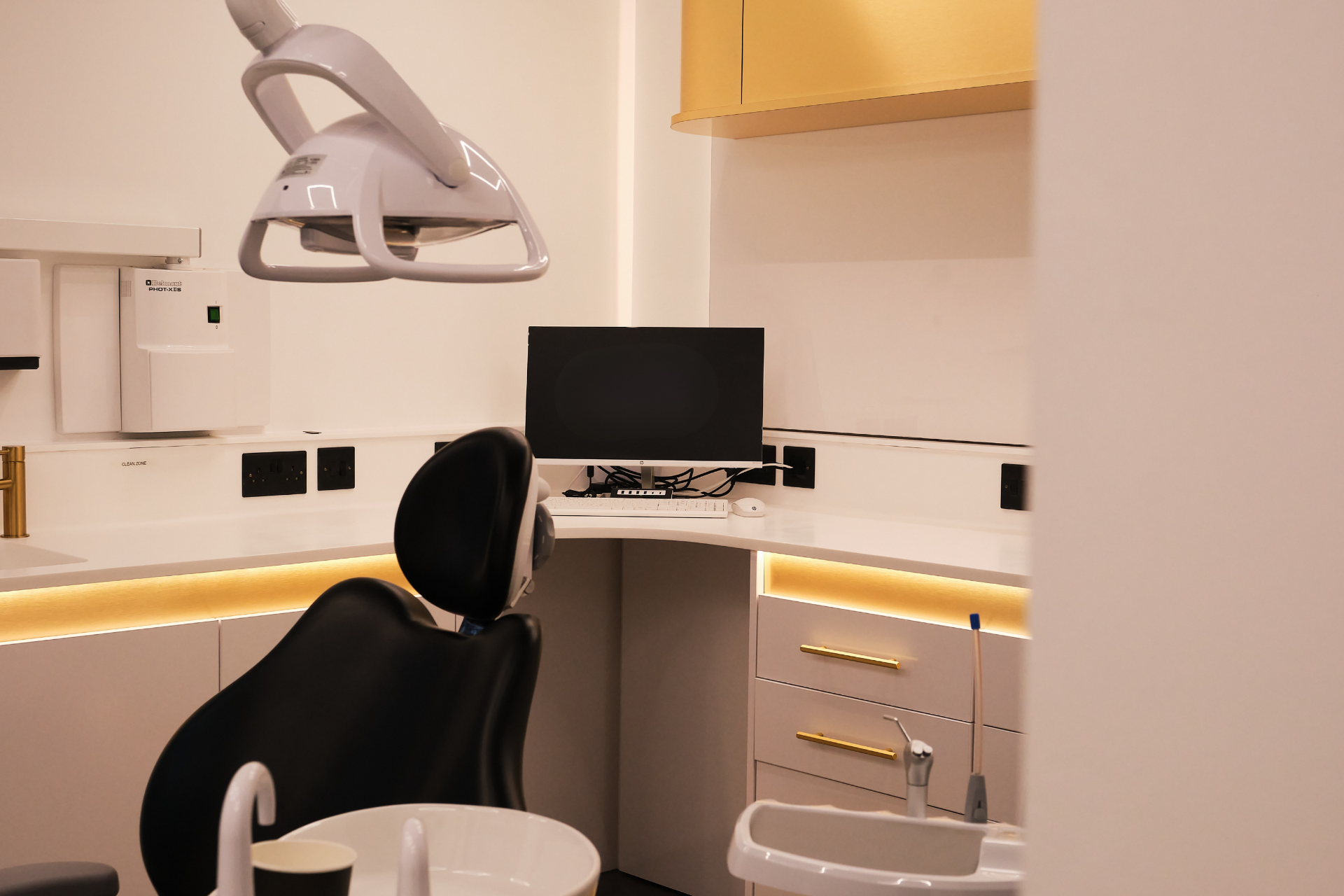
Why treat gums with us
Healthier gums. Fresher breath. Fewer surprises.
Full-mouth periodontal care that reaches below the gumline, reduces bleeding and supports long-term stability.
Deep cleaning where it counts
Biofilm and calculus removed above and below the gumline to calm inflammation.
Comfort options
Gentle technique, topical or local anaesthetic where areas are tender.
Measurable progress
Pocket charting and bleeding scores before & after, see results in black and white.
Home-care coaching
Personalised tips on brushes and interdental cleaning to keep gains between visits.
Maintenance that fits
Mini, Regular or Super sessions matched to your gum health and healing response.
Fresh breath boost
Reducing bacteria helps breath and supports overall oral health.
Full-mouth service
Gum treatment in four steps
Deep cleaning under the gumline with gentle pacing, then a maintenance plan that actually sticks.
Assess & chart
We map pocket depths and bleeding points, take X-rays if needed, and agree Mini, Regular or Super.
Numb tender spots
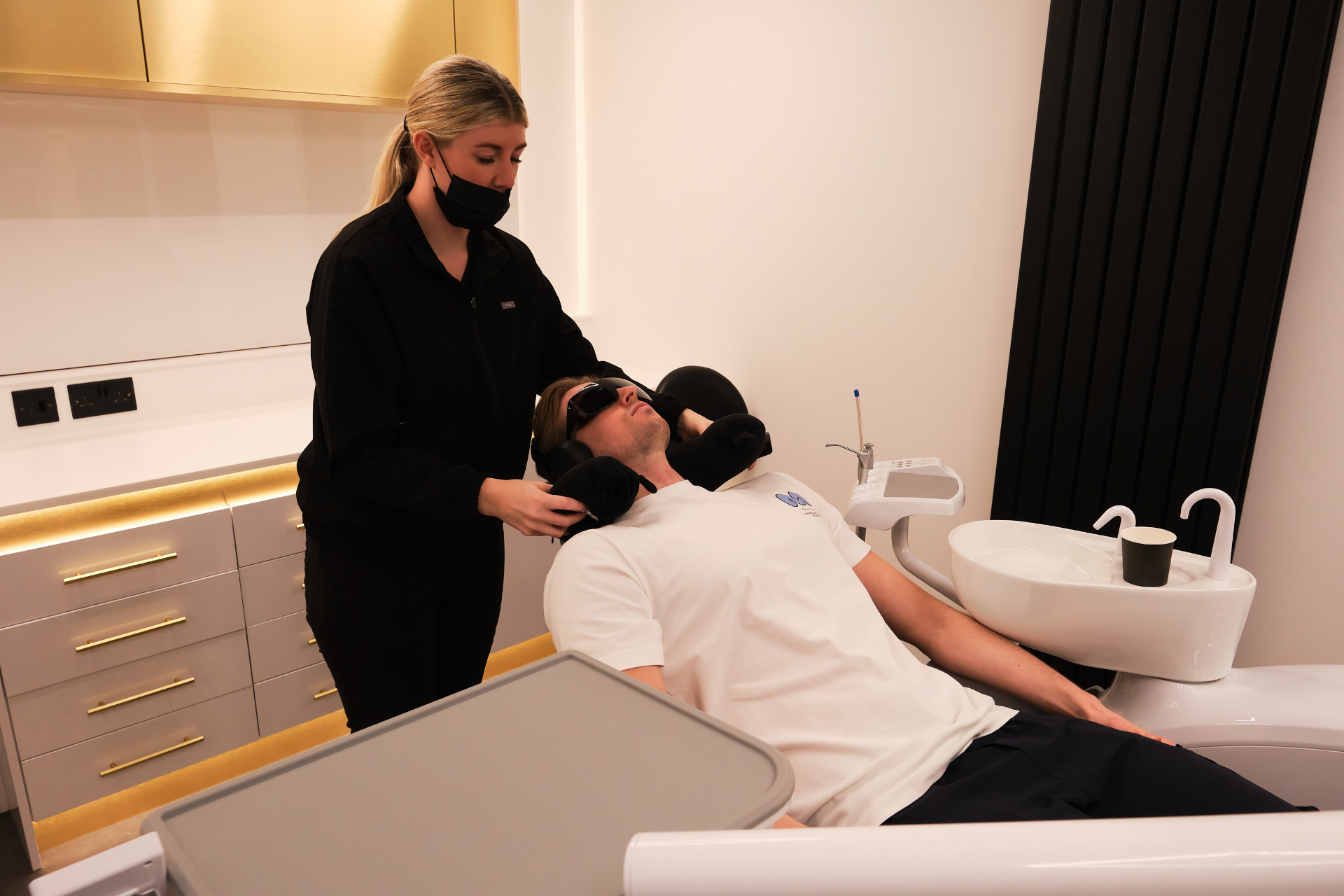
Topical or local anaesthetic where required. Comfort comes first so we can clean thoroughly.
Deep clean
AirFlow removes biofilm and calculus above and below the gumline.
Polish & plan
Home-care coaching, and a 6–12 week review.


Understand what’s going on
Types of gum disease & related conditions

Gingivitis (early inflammation)
Red, puffy gums that bleed when brushing. Usually reversible with improved cleaning and a professional polish.
- Signs: Bleeding on brushing/flossing, bad breath.
- Treatment: Hygiene visit, home-care coaching, review.
Periodontitis (gum & bone disease)
Deeper inflammation where plaque hardens below the gumline, creating pockets and gradual bone loss.
- Signs: Bleeding, receding gums, drifting teeth, gaps.
- Treatment: Full-mouth gum therapy (Mini/Regular/Super) with review at 6–12 weeks.
Rapid progression (aggressive forms)
Faster bone loss in some people, sometimes linked to family history or systemic factors.
- Signs: Sudden mobility, deep pockets at a younger age.
- Treatment: Intensive cleaning blocks, closer recalls, liaison with your dentist/GP if helpful.
Peri-implant mucositis
Inflamed gums around a dental implant without bone loss, often reversible if treated early.
- Signs: Redness, bleeding when cleaning around the implant.
- Treatment: Implant-safe debridement, tailored home-care tools, review.
Peri-implantitis (implant bone loss)
Inflammation with measurable bone loss around an implant. Needs prompt, focused care.
- Signs: Bleeding/suppuration, deep pockets, radiographic changes.
- Treatment: Non-surgical/surgical decontamination and maintenance plan; referral as required.
Gum recession & sensitivity
Gums pull back to expose root surfaces, can be linked to brushing style, bite, or past inflammation.
- Signs: “Longer” teeth, sensitivity to cold/sweets, notching at the necks.
- Treatment: Technique tweaks, desensitisers, bite checks; surgical options in select cases.
Not sure where you fit?
Book a gum health assessment: we’ll measure, explain, and recommend the right treatment going forward.
Calm care. Healthier gums.
Ready to treat sore or bleeding gums?
We remove the bacterial build-up, calm inflammation and set a simple home plan to keep gums stable.
- Comfort-first deep cleaning (local anaesthetic where needed)
- Pocket charting & progress tracking you can see
- Maintenance plan to keep results steady